
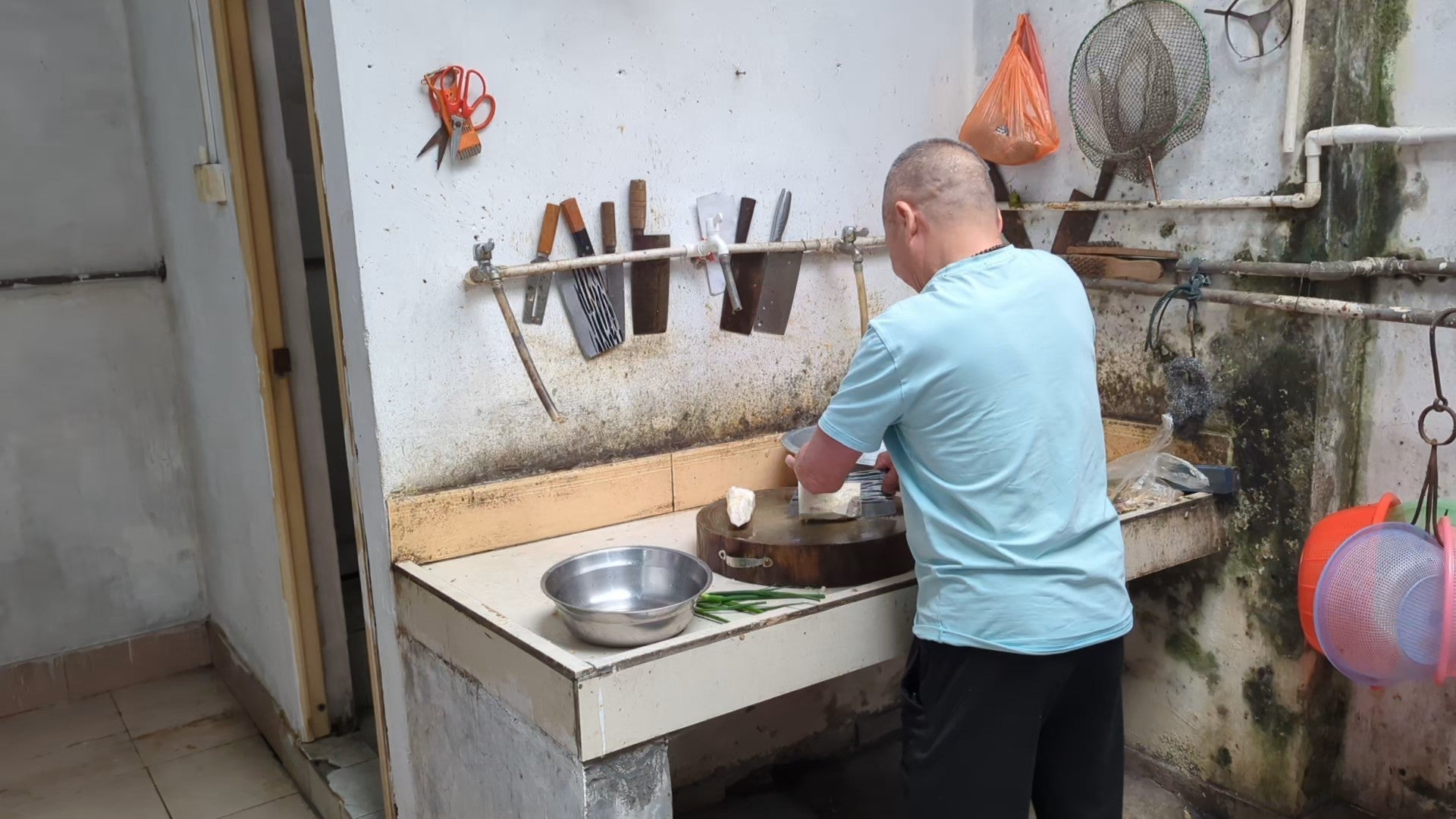
Walk into almost any Chinese restaurant kitchen and you'll see one knife used for nearly everything—a broad, rectangular Chinese cleaver. At first glance it looks like a butcher's tool, but that's just a coincidence. The Chinese chef's knife evolved not for chopping through bone, but for preparing food that reflects centuries of cooking traditions, from chopsticks and communal dining to fuel-efficient wok cooking.
So why do Chinese chefs use such big knives? In a word: chopsticks. A quick history lesson.
Chinese culture actually has a pretty strong aversion to knives, seeing them as unlucky and inauspicious in the wrong context. Confucius, a foundational philosopher in Chinese history, wrote that: ‘the honourable and upright man keeps well away from both the slaughterhouse and the kitchen. He allows no knives on his table’. Out of place knives are almost offensive - I vividly remember the disdain of my grandmother when passing the Bank of China building, a vaguely knife-shaped skyscraper in Hong Kong, and lamenting the poor people that need to live in sight of its blades.

Since laying a table with knives is out of the question, the chef ends up having to do a lot more cutting in the kitchen, before the food reaches the table. Chinese diners of all social classes generally expect the food to be ready-to-eat by the time it reaches the table. Not just cooked, like a steak or a pie, but bite-sized and ready to be picked with chopsticks.
This has a couple of knock on effects, relating to the fundamentals of cooking: cutting food up smaller results in an exponentially greater surface area, resulting in better flavour penetration and faster cooking times.
This would not have gone unnoticed to cooks throughout Chinese history, especially those living in periods where cooking fuel was hard to come by. Throughout long periods, China went through significant fuel shortages, especially when compared to the much more densely forested Europe or North America. This goes some way to explaining the European preference for the oven, and following on from that the preference for roasting whole cuts of meat that must be carved or cut at the table by the diners.

Compared to heating up an oven, the direct heat of wok cooking is very frugal with fuel. I actually tested this out, using an imitation of a traditional Chinese wood fired stove, and was impressed with how little wood it took to get hot. The efficiency gain was particularly stark with the recipe I chose to test it out with: suanla tudousi (sour spicy potatoes). Stir frying the julienned potato reduced cooking time markedly when compared to cooking a similar amount of potato in the oven, even after taking into account extra preparation time.

Suanla tudousi is a great side dish, and can be made ahead of time and served cold if you’re hosting a bigger meal. I’ve even bulked it up to serve as a light meal, by adding tender greens in the last 30 seconds of stir frying and topping with toasted peanuts. There are countless variations of this dish, this version is just one of them.
Recipe

500g potatoes (waxy, like Jersey Royals)
Salt
100g spring onions
Ginger (thumb sized amount)
1 tbs Sichuan peppercorn
1 tsp chilli flakes
2 tbs white rice wine vinegar (not too aged)
2 tsp light soy sauce
½ tsp sesame oil
1 tsp sugar
Coriander
Peanut oil
Method
Peel and finely julienne the potato. Aim for the thickness of a chopstick, and try to get them as uniform as possible, to get a nice even cook. The length matters much less than the thickness for this. I like cutting them straight into a large bowl of cold water as you’ll need to soak them for at least ten minutes to get rid of some of their starch.
Slice your spring onions and ginger into similar sized pieces - again aiming for evenness and visual harmony. Slice your coriander, roughly separating the stalks from leaves.
Optional - premix your sauce of vinegar, soy sauce, and sugar making sure to fully dissolve your sugar is dissolved fully. You can also add these to taste as you stir fry.
Agitate your potato in the water, drain and wash again. Drain and pat dry.
Heat a wok with a few generous tablespoons peanut (or some neutral) oil, over a medium heat. Add your sichuan peppercorns and fry until very fragrant. Add your spring onion, ginger and coriander stalks, upping the heat to medium high, then add in your chili flakes. Fry until fragrant, then add your potato. Upping the heat still more, and add the potato. Stir and cook for a couple of minutes, then add your sauce. Stir fry until the potatoes are partially softened, but still have a slight crunch to them. Check for seasoning.
Out. Serve hot or cold, topped with cilantro and chilli oil.
Share:
Fat Boy Ming's Stir Fried Macaroni